
Picholine olives: the green olive of the Gard, from tree to bowl
What picholine olives are, where the name comes from, how the green olives of Nîmes are cured, when to buy them and how to keep them at home.
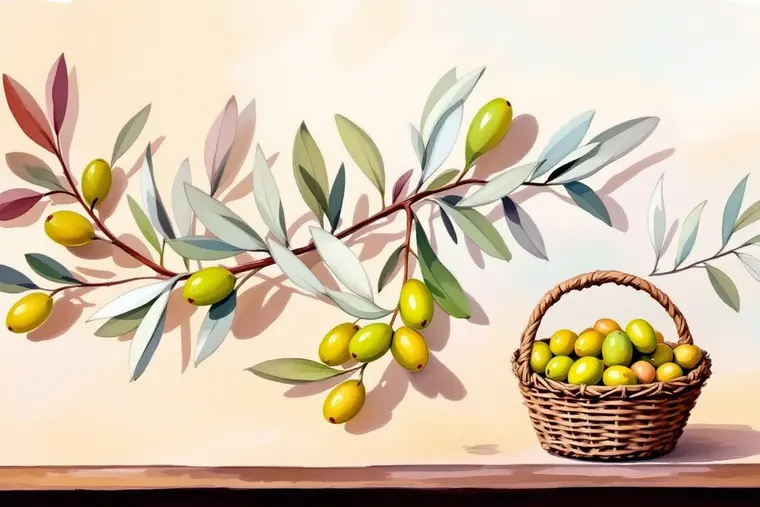
Ask for an apéritif anywhere between Nîmes and Uzès and a saucer of small, long, apple-green olives arrives with it. They are firm enough to crack between the teeth and taste of fresh grass, hazelnut and salt. This is the picholine, and it is to the Gard what the Cox is to Kent: the local fruit that went round the world and is still best near the trees it came from.
Bezouce is a good place to learn about it, because the village has had an olive co-operative since 1947.
What a picholine is
Picholine is the name of a variety of olive tree and of the olive it bears. The fruit is narrow and slightly curved, pointed at the tip, with a stone that comes away cleanly. French Wikipedia calls it a dual-purpose olive: best known as a green table or cocktail olive, but pressed for oil too. The oil is fruity and green with light bitterness and pepper, and aromas that tasters describe as apple, pear and cut hay.
The tree has travelled. It grows across the Mediterranean and beyond, and Morocco has a famous picholine of its own, which is a different tree that borrowed the name. If a jar says "Picholine du Languedoc" or carries the Nîmes label, it is the one this page is about.
Older names tell you where it started: Coiasse, Colliasse, plant de Collias. Collias is a village on the Gardon, between Uzès and Remoulins, a short drive from Bezouce and the place where people now go to rent canoes.
The Picholini brothers
The story of the name is told with small variations. Two brothers called Picholini, of Italian origin, settled at Saint-Chamas in Provence in the seventeenth century. They made popular a method of curing green olives so that they kept their colour and lost their bitterness: equal volumes of olives and ash, covered with water, then a scented brine. Olives made that way became olives à la picholine.
At first the brothers used a variety from around Saint-Chamas. Later a variety from the Gard, the one from Collias, turned out to suit the recipe better, and it took over the name. So the picholine is called after a process and two men who lived in another département. It is a tidy tale and historians of food repeat it; there is no reason to doubt the outline.
Why a raw olive is uneatable
Pick a green olive from the tree and bite it, once. The bitterness is ferocious and lasts half an hour. It comes from a compound called oleuropein, and every olive tradition is a way of getting rid of it.
| Method | What happens | Result |
|---|---|---|
| Ash and water, the old way | Alkali in the ash breaks down the bitterness over days | Green, mild, some ash flavour |
| Lye (caustic soda) and rinsing, the modern way | Hours instead of days, then many changes of water | Bright green, crisp, clean taste |
| Brine alone | Slow fermentation over months | Softer, tangier, less green |
| Dry salt | Salt draws out water and bitterness from ripe fruit | Wrinkled and black, a different olive altogether |
Nîmes olives are made by the second method. At the Bezouce co-operative, as a 2020 report described it, the olives are sorted by size, treated with soda, rinsed, and then kept in brine in a cold room at 5 to 7 degrees for weeks or months. People fill jars from the stock as they are needed. There are six sizes. Five workers are busy for about a month at the height of the season, and one person looks after the shop for the rest of the year.
The label to look for
Two protected names cover olives here, and they sit beside a third for oil.
- Olive de Nîmes has been an appellation since a decree of 2 May 1995 and is protected across Europe. It is a green picholine from a defined area in the Gard and part of the Hérault, and it must be whole and in brine.
- Huile d'olive de Nîmes is the protected oil, in which picholine plays the main part. Olive oil country is worth an afternoon to itself.
Since 2020 the growing and processing of olives in the Nîmes country has also been on France's national inventory of intangible heritage, with the dry-stone walls and terraces that go with it.
On a market stall the label is not always shown on loose olives. Ask: "Elles sont de Nîmes, en AOP?" A stallholder who has the real thing will be pleased to say so, and will usually tell you the grower.
Bezouce and its co-operative
The olive co-operative of Bezouce, L'Oulivo, began when 85 growers joined forces in 1947. At its largest it had about 200 members and its own mill, which closed after 1956, the year of the great frost that killed or cut back olive trees all over the south of France. By 2020 there were 17 members with around 40 hectares, producing 18 to 22 tonnes of table olives a year, with oil olives sent to Beaucaire for pressing. The premises moved from the middle of the village to the main road in 2016.
That same report has a figure that says a lot about the hills behind the village: only about a third of the old olive groves in the area were still being worked. The rest stand among the oaks, unpruned. On the walk through the olive groves you will see both kinds and learn to tell them apart.
The shop is listed by Gard Tourisme as open every day of the year, with picnic tables outside. The listing dates from January 2024 and gives olives from 2.50 to 4.95 euros and oil from 6.55 to 37.50 euros, so treat these as a guide and not a price list.
The year of an olive
- April and May. Pale flowers, easily missed. Wind and rain now decide the crop.
- July and August. The stone hardens. Growers hope for one good storm.
- September and October. Table olives are picked green and by hand, before they soften. A bruised olive goes brown in the brine.
- October to December. Oil olives are picked, from green to violet. The mill at Cabrières crushes in this period and is open to visitors all year.
- November onwards. New-season olives reach the shops. They are at their greenest, with the most snap, from late autumn into winter.
- February and March. Pruning. The saying goes that a swallow should be able to fly through the tree.
So the best souvenir month is November or December. Olives bought in August are last year's, and perfectly good, but softer.
How to serve and keep them
Rinse them if they taste too salty, and let them come up to room temperature. Purists stop there. If you want to dress them, use things that grow in the same soil: a strip of lemon peel, a bruised clove of garlic, wild fennel, thyme, a thread of oil. Give them an hour. Do not add vinegar, which flattens the fresh taste.
In cooking, add picholines at the end. They are good with rabbit, with duck, in a chicken braise with white wine, or roughly chopped over cod. Long cooking turns them grey and they lose the crunch that you paid for.
Keep them in their own brine in the fridge, below the surface, and take them out with a spoon and not with fingers. Opened, they hold for a few weeks. For the trip home buy vacuum packs, which the producers sell for that purpose, or a sealed jar wrapped in two socks and put in checked luggage.
What to drink with them
A dry white or rosé from the same hills is the obvious partner. Olives are salty and slightly bitter, which makes tannic reds taste metallic, so leave the big bottle for later. The guide to Costières de Nîmes wine will help you choose. A cold beer works. Pastis works if you like two strong characters at one table.
Questions people ask
Are picholine and Lucques the same?
No. Lucques is another green olive from the Languedoc, curved like a crescent moon and softer, with a buttery taste. Confusingly, one of the old names for picholine was "false Lucques".
Can I pick olives from a roadside tree?
Assume every tree has an owner, even one that looks forgotten. Ask, or leave it. See the notes on harvest manners.
Can I plant one?
The picholine is hardy by olive standards and is sold by nurseries well outside the south. It needs sun, sharp drainage and a second variety nearby for a decent crop. It will also need patience: four or five years before you fill a saucer.
Nearby in the carnet
Costières de Nîmes wine: a short guide from inside the vineyard
Costières de Nîmes in plain words: where the pebbles come from, the grapes and colours, why it counts as Rhône wine, and how to taste it in Bezouce.
Table and cellar ·